Eugene/Springfield Real Estate and Community News

July 20, 2026

How Buyer-Friendly Is Today's Housing Market?

I have noticed that, over the past several weeks, homebuyer interest and overall market activity have declined in the Eugene and Springfield area. This could be a significant opportunity for those who are planning to purchase a home now or in the near future.

While mortgage interest rates remain higher than they were several years ago, we are unlikely to see those historically low rates return anytime soon. In fact, mortgage rates have declined slightly and are currently holding below where they were at this time last year. I wouldn't expect rates to drop much further in the near future. If anything, they are more likely to increase than decrease over the next year.

Here are a few reasons why now may be a good time to get serious about purchasing a home.

The Eugene housing market has remained relatively resilient due to limited land available for development, the area's desirable quality of life, and steady buyer demand. Although buyers generally have more negotiating power than they did during the pandemic housing boom, well-priced homes in desirable neighborhoods can still sell quickly.

For buyers in Eugene today:

  • They have more negotiating power than in recent years.
  • They have more homes to choose from.
  • They are less likely to face bidding wars on every property.
  • They should still expect strong competition for move-in-ready homes in prime locations.

Overall, I'd rate today's market for buyers as:

  • Negotiating leverage: ★★★★☆ (4.5/5)
  • Selection: ★★★★☆ (4/5)
  • Affordability: ★★☆☆☆ (2/5)
  • Overall opportunity: 8/10 for buyers who can comfortably qualify for today's mortgage payments.

For individuals with a stable income who plan to stay in their home for several years and can comfortably afford the monthly payment, this may be an attractive time to buy. Buyers currently have more room to negotiate than they have had in several years, and mortgage interest rates are likely more favorable now than they will be in the near future.

Have An Awesome Week!

Haas Real Estate Team

541.349.2620

galand@galandhaas.com

July 6, 2026

Mortgage Rates Drop: Good News for Home Buyers and Sellers

There is more good news for both home sellers and home buyers. In the week leading up to the Fourth of July holiday weekend, mortgage rates declined. This was unexpected by many, but it is certainly welcome news for a market that has been somewhat frozen while waiting for signs that mortgage rates would begin to fall.

One thing that has become very apparent is that mortgage rates have recently been more closely tied to oil prices than to most other economic indicators.

My advice is this: if you have been waiting for mortgage rates to drop before pulling the trigger on a home purchase, this may be your opportunity. I wouldn't expect any substantial rate reductions in the near future.

Here is an article published last week by Realtor.com.

Mortgage rates dropped substantially Thursday, as falling oil prices and the tentative U.S.-Iran peace deal pushed long-term borrowing rates lower.

The average rate on 30-year fixed home loans fell to 6.43% for the week ending July 2, down 6 basis points from 6.49% the previous week, according to Freddie Mac. For perspective, rates averaged 6.67% during the same period in 2025.

It marked the biggest weekly decline in mortgage rates since late April, and took average rates to their lowest level since May 14.

"The 30-year fixed-rate mortgage eased slightly this week, averaging 6.43%,” says Sam Khater, Freddie Mac's chief economist. "With rates at a seven-week low and purchase demand continuing to edge higher, it's an encouraging sign as prospective homebuyers respond to modest improvements in affordability."

Easing oil prices have been the key factor for mortgage rates, although new labor market data in recent days has influenced the key 10-year Treasury yield as well. A stronger-than-expected job openings report sent yields higher this week, while the key monthly reading on U.S. job growth showed weak hiring, partly reversing the trend.

"For most of Freddie’s survey window, yields sat near their lowest levels since early May as oil prices kept retreating and Iran ceasefire talks progressed, leaving room for this week’s average to land below last week’s mark despite Tuesday’s late bump," says Realtor.com® economist intern Glen Morgenstern.

The Federal Reserve has held rates steady since December but has turned notably more hawkish this year as new Chair Kevin Warsh and the Federal Open Market Committee (FOMC) focused their attention on combating higher inflation.

For buyers, this environment of continued relative stability comes as good news after a volatile spring, and Realtor.com June housing data released Wednesday shows that shoppers are adapting to the current rate reality rather than waiting it out, according to Morgenstern. 

As reflected in the report, listing prices were down 2.5% year over year in June, the steepest annual decline in the data series since 2017, while pending sales grew for a seventh straight month. 

While April’s Case-Shiller index still shows nominal price growth, it trailed inflation for an 11th-straight month, meaning that even as sticker prices rise, the real price of a home for buyers is going down relative to other goods and services.


Have An Awesome Week!

Haas Real Estate Team

541.349.2620

galand@galandhaas.com

June 29, 2026

Stable Market, Strong Demand: What Buyers and Sellers Need to Know

As I predicted, the national housing market is holding up, even with interest rates hovering around 6.5%. Pent-up housing demand and a low inventory of homes for sale are keeping the market more than stable.

One concern has been that inflation might prompt the new Fed chair to raise interest rates at the next meeting. Personally, I doubt that will happen. The inflation we are seeing today is different from the inflation we experienced several years ago. I believe the current inflationary pressures will taper off and ease with the conclusion of the Iran conflict.

I expect interest rates to remain about where they are through the next quarter. What happens after that is anyone's guess.

My advice is simple: if you're thinking about buying a home, don't wait. If you're thinking about selling a home, don't wait. Many buyers and sellers are already acting on these market conditions.

The following article was published this past week by the National Association of Realtors.

WASHINGTON (June 17, 2026) – Pending home sales in May increased by 3.8% month-over-month and 4.8% year-over-year, according to the National Association of REALTORS® Pending Home Sales report. The report provides the real estate ecosystem—including agents, homebuyers and sellers—with data on the level of home sales under contract.

Month-over-month and year-over-year pending home sales rose in the Northeast, Midwest, South and West.

“A late spring buyer rush—even with mortgage rates not budging—is an indication of pent-up housing demand and consumers’ acceptance of above-6% mortgage rates as the new normal,” said NAR Chief Economist Dr. Lawrence Yun. “The inventory-constrained Northeast region, which has seen faster home price growth but slower home sales for several months, is now showing more buyer contract signings. More supply is needed to help moderate home price growth.”

“Going forward, falling oil prices will help lower mortgage rates,” Yun said. “But declines will be modest given sizable borrowing by the federal government and strong AI investment spending by tech companies.”

Have An Awesome Week!

Haas Real Estate Team

541.349.2620

galand@galandhaas.com

June 19, 2026

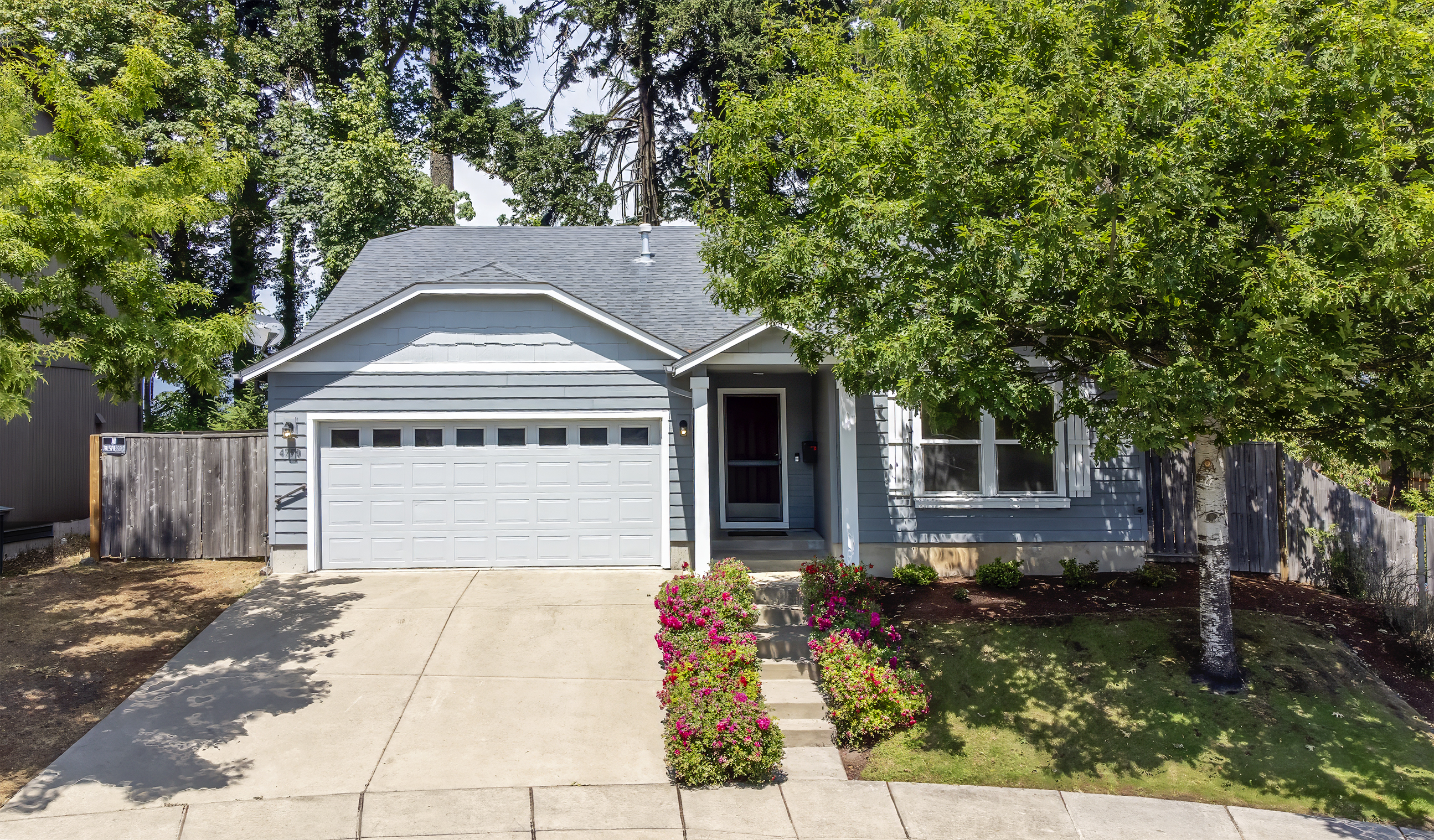
4950 Glacier Dr, Springfield, OR 97478

4950 Glacier Dr, Springfield, OR 97478

3 bed I 2 bath I 1,423 sqft

$445,000


Open Saturday, June 20, 12-2 PM


Welcome home to this beautifully maintained 3-bedroom, 2-bathroom home offering 1,423 square feet of comfortable living space in a desirable Thurston neighborhood. Fresh interior paint, newer exterior paint, and professionally cleaned carpets make this a move-in-ready home! Inside, you'll find abundant natural light, vaulted ceilings, an open-concept layout, and a cozy gas fireplace. The spacious kitchen features under-cabinet lighting, a pantry, breakfast bar, and all appliances included. The primary suite offers dual walk-in closets, double sinks, and a walk-in shower. Enjoy outdoor living on the covered patio overlooking the fully fenced backyard with raised garden beds and timed irrigation. Additional highlights include a 12' x 16' shop with lighting, dedicated boat/toy storage at the side of the house, and a recently serviced HVAC system.


Haas Real Estate Team
541.349.2620
galand@galandhaas.com

Posted in Homes For Sale
June 15, 2026

Why Today's Housing Market May Favor Sellers

We are still living in a very unstable housing market, both locally and nationwide. The question is: Which way is the market actually heading?

Even with poor national economic news, home sales have picked up, and so have mortgage interest rates and home prices. It would be difficult to find a stranger housing market at any time in history than the one we are experiencing right now.

Inflation came in higher than expected this past week, and this may have sealed the deal for the Fed not reducing rates anytime soon. However, the housing market is still showing some resiliency.

If the conflict with Iran winds down and we can get the economy back on track, we just might see a greatly improved housing market later this year.

If you are considering selling your home, my advice is: don't wait. There are plenty of buyers out there right now looking to purchase, and many will move quickly if mortgage rates decline even modestly.

The following is a national housing market update from Realtor.com.

It has been a turbulent week for the broader economy—inflation reached a three-year high, tensions in the Middle East continued to fluctuate, and mortgage rates ticked up to 6.52%. 

Yet, beneath the macroeconomic noise, the housing market is flashing a notable bright spot, with home sales climbing to their strongest pace of the year and household real estate wealth reaching an all-time high.

The week's most significant economic release was the consumer price index, which showed inflation rising 4.2% in the year ending in May—a three-year high. The CPI measures how rising prices affect consumers based on typical spending patterns.

Core inflation, which excludes volatile energy prices, also increased over the past year, though its month-to-month gain was more moderate. Because core inflation strips out the direct impact of Middle East–related oil price shocks, it serves as a useful gauge of how broadly price pressures are spreading through the economy. This month's reading offered a more reassuring picture than last month's, though it is not a clean bill of health.

"Although inflation contagion is not yet deepening, it remains the most important thing to watch," notes Realtor.com® senior economist Jake Krimmel.

The inflation backdrop also means that consumers are feeling a real squeeze. Even as take-home pay continues to rise, inflation is eroding purchasing power—pressuring households to either cut spending or draw down savings.

Mortgage rates edge higher

With inflation climbing and the jobs market demonstrating continued resilience, mortgage rates moved modestly higher, rising 4 basis points to 6.52% for the week, according to the latest Freddie Mac data.

While that represents a small step back, rates are still below where they stood at this point last year—a meaningful silver lining for both buyers and sellers, who appear to be absorbing the uptick without pulling back significantly from the market.

Realtor.com economists Anthony Smith and Jiayi Xu discuss this in more detail in our latest weekly mortgage rate update video.

Home sales climb to their highest pace of the year

Perhaps the most encouraging headline of the week: Existing-home sales rose to 4.17 million in May, the strongest reading of the year and 3.2% above May of last year.

First-time homebuyers—a group that has faced persistent barriers to entry—made up a larger share of sales in May compared to both the prior month and prior year. While the market remains competitive, this is a meaningful sign of progress for determined buyers working their way in.

Home sale prices continued to increase, but their 1.3% gain did not outpace inflation or recent wage growth—a development that is gradually improving affordability conditions.

The local picture: Northeast and Midwest lead competitive markets 

As always, housing is local. The Realtor.com May Hottest Housing Markets report, written by senior economist Hannah Jones, reflects familiar regional patterns, with markets in the Northeast and Midwest continuing to rank among the most competitive in the country.

Nationally, weekly housing data shows a market in a holding pattern.

Asking prices remain modestly softer than a year ago, suggesting sellers may be slightly more motivated than last year. Active listings are still running ahead of year-ago levels, though that gap is narrowing as homes are spending roughly the same amount of time on the market as they did a year ago. New listing activity—a closely watched leading indicator—remains uneven, tracking broadly in line with the prior year on a cumulative basis.

Household real estate wealth hits a record $48.7 trillion

Even as asking prices softened, sales prices continued to rise, helping push the total value of household real estate to a new record of $48.7 trillion in the first quarter of 2026, according to Federal Reserve data. After accounting for mortgage debt, an estimated $34.9 trillion in equity remains—a substantial contributor to household wealth across the country.

The Realtor.com Generational Wealth research underscores that homeownership doesn't just build individual wealth—it also creates financial advantages that carry forward across generations.

Luxury market pandemic-era gains are holding unevenly

A new monthly look at the high-end housing market, written by Smith, finds that luxury listing prices are softening nationwide, but not uniformly.

On average, high-end homes have retained 59% of their COVID-19 pandemic-era price gains. In Minneapolis and Boise, luxury homes have actually exceeded their pandemic-era highs, while five other markets have retained more than 80% of their run-up.

From list price to sale price

Finally, Realtor.com senior economist Joel Berner examined how sale prices relate to list prices across different market conditions, seasons, property types, and regions. As of March, the typical home sold for 99% of its final list price and nearly 97% of its initial asking price.

Homes in the South are more likely than those in other regions to close below asking price—a pattern that has held relatively consistently—while homes in the West have shown the greatest variation between asking and final sale prices over the past six years.

Have An Awesome Week!


Haas Real Estate Team

541.349.2620

galand@galandhaas.com


June 8, 2026

Higher Inventory Brings Opportunity to Lane County Homebuyers

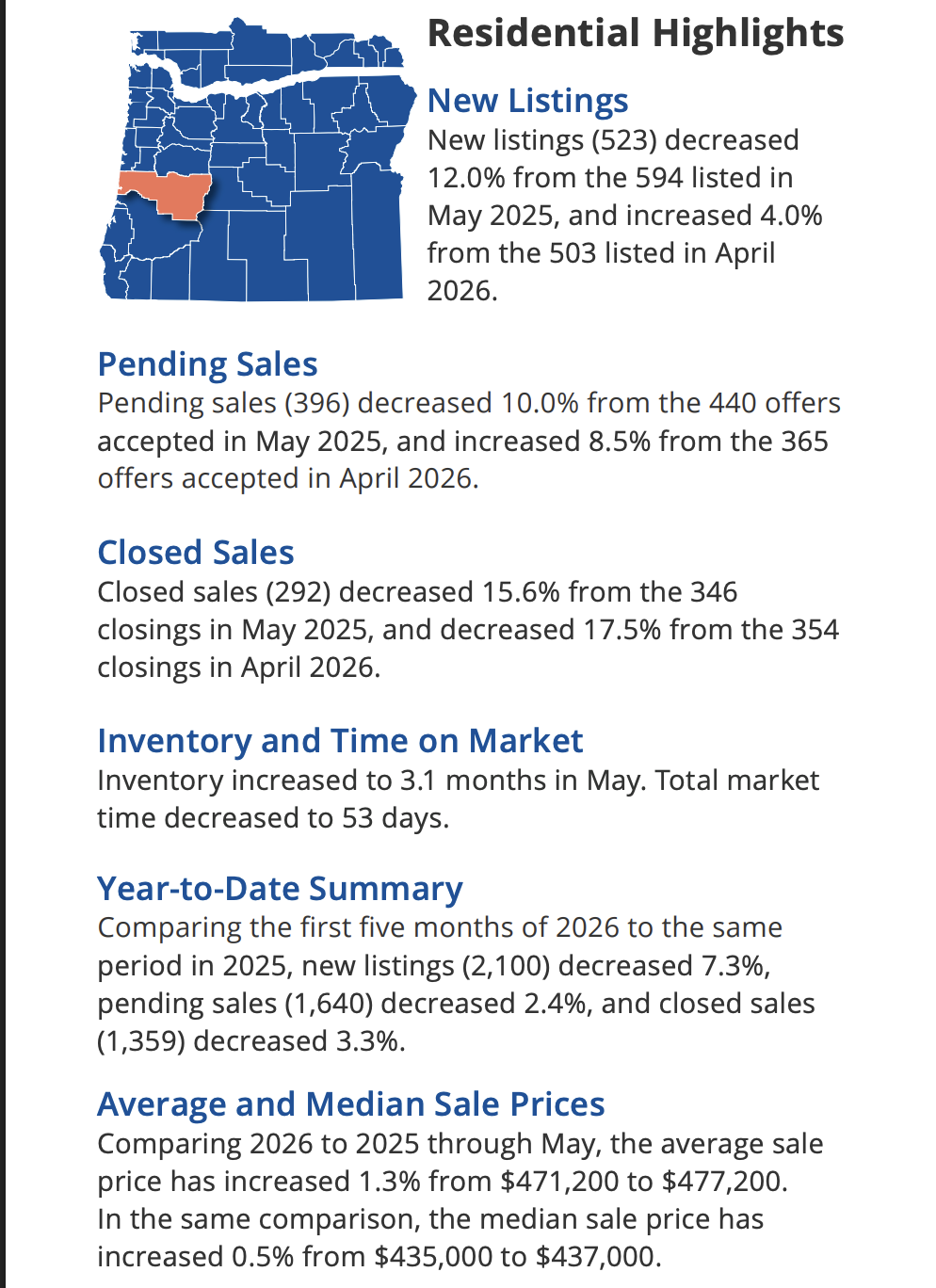
May saw slight improvements in the Eugene and Springfield housing market. Home sales and pending sales improved over April but were down from 2025. Overall, the market is not experiencing any major ups or downs.

The inventory of homes for sale increased in May compared to April, which is good news for a market that has been starving for available homes to purchase. We remain in the same market conditions that either require mortgage rates to decline or home prices to decrease. Home affordability continues to be a major obstacle for most prospective homebuyers.

Mortgage rates may not see much improvement anytime soon, as inflation is once again beginning to rear its ugly head. Inflation will likely force the Federal Reserve to either hold rates steady or possibly increase them again. This does not signal any major market changes for the upcoming summer months.

There continues to be plenty of market uncertainty, but if you are delaying a home purchase while waiting for lower mortgage interest rates, you may face a long wait. If you are considering purchasing a home, now may be a good time to take advantage of increased housing inventory and current mortgage rates, which could be lower than what we may see in the near future.

The following report provides a full assessment of the May 2026 housing market for Lane County, Oregon.


Haas Real Estate Team

541.349.2620

galand@galandhaas.com

June 4, 2026

Buy Land, Build House... Here's How

HAVE YOU EVER SEEN A PERFECT LITTLE LOT SOMEWHERE AND WONDERED WHAT IT WOULD TAKE TO BUILD A HOUSE THERE? CAN YOU AFFORD IT? WHAT’S THE PROCESS? READ ON TO FIND OUT. 

Building a house from scratch sounds overwhelming to many people. There are stories about delays, surprise costs, and unfinished projects that make the process feel risky and complicated. 

But in reality, most custom homes follow a fairly predictable sequence. Once you understand the steps, the process becomes much less mysterious. 

Here’s a practical overview of how buying land and building a home usually works. 

STEP 1: DECIDE ON A BUDGET BEFORE LOOKING AT LAND 

One of the biggest mistakes buyers make is purchasing land first, then discovering they can’t comfortably afford the type of home they wanted to build on it. 

Start by talking with a lender about your total project budget. 

That budget needs to include: 

  • The land purchase 
  • Site preparation 
  • Utility hookups 
  • Architectural plans 
  • Permits 
  • Construction costs 
  • Landscaping and driveway work 
  • A contingency reserve 

As a rough guideline, many new custom homes in the U.S. now cost anywhere from $175 to $350+ per square foot to build, depending on the area and level of finishes. That means a 2,000-square-foot home could range from roughly $350,000 to $700,000 before the land itself. 

The land may only be part of the total cost. 

STEP 2: RAW LAND ISN’T USUALLY “READY” 

A beautiful piece of land can come with hidden expenses. 

Before buying, investigate: 

Utilities 

Does the property already have: 

  • Water service? 
  • Sewer connection? 
  • Electricity? 
  • Natural gas? 
  • Internet access? 

If not, you may need: 

  • A well 
  • Septic system 
  • Utility trenching 
  • Propane installation 

These costs can easily add tens of thousands of dollars. 

Zoning and Restrictions 

Check local zoning rules and HOA restrictions. 

Some lots have limits on: 

  • Home size 
  • Exterior materials 
  • RV parking 
  • Guest houses
  • Short-term rentals 

Site Challenges 

Steep slopes, poor soil, flood zones, or protected wetlands can significantly increase building costs. 

A cheap lot sometimes becomes an expensive project. 

STEP 3: FINANCING WORKS DIFFERENTLY THAN A NORMAL MORTGAGE 

Most people don’t simply get one standard mortgage at the beginning. 

Instead, they often use a construction loan. 

A construction loan works in stages. 

The lender releases money gradually as the builder completes portions of the home: 

  • Foundation 
  • Framing 
  • Roofing 
  • Interior work 
  • Final completion 

During construction, borrowers often make interest-only payments on the amount already drawn. 

Once the home is complete, the loan typically converts into a traditional mortgage. 

Some lenders offer “one-time close” construction loans that simplify the process. 

STEP 4: CHOOSE YOUR BUILDER CAREFULLY 

This may be the most important decision of the entire project. 

A good builder doesn’t just build the house. They guide the process, coordinate subcontractors, manage inspections, and help prevent costly mistakes. 

Interview several builders and ask: 

  • How long have they been building locally? 
  • Can they provide recent references? 
  • Do they have completed homes you can tour? 
  • What is included in their quoted price? 
  • How do they handle cost overruns or upgrades? 

Also ask about timelines. 

Many buyers underestimate how long construction can take. Even relatively straightforward homes often require 8–14 months from permit approval to completion.  

STEP 5: PLANS AND PERMITS COME FIRST 

Before building begins, you’ll need finalized plans. 

These may be: 

  • Fully custom architectural plans 

  • Modified stock plans 

  • Builder-provided plans 

Once plans are complete, permits must be approved by the local jurisdiction. 

This phase can take weeks or even months depending on the area. 

The builder usually manages much of this process, but buyers should understand that delays here are normal. 

STEP 6: EXPECT CHANGE ORDERS AND EXTRA COSTS 

Almost every build includes unexpected expenses. 

Buyers often change their minds during construction after seeing spaces in person. 

Common upgrades include: 

  • Larger windows 

  • Better flooring 

  • Expanded patios 

  • Higher-end cabinets 

  • Additional lighting 

Then there are surprise site costs: 

  • Rock excavation 

  • Drainage issues 

  • Material price increases 

A smart rule is to keep a contingency reserve of at least 10–15% of the total project budget. 

That financial cushion removes a lot of stress. 

STEP 7: INSPECTIONS HAPPEN THROUGHOUT THE PROCESS

New construction involves multiple inspections during different stages. 

Inspectors may review: 

  • Foundation work 

  • Electrical systems 

  • Plumbing 

  • Framing 

  • Insulation 

  • Final safety compliance 

Even though the home is new, many buyers still hire an independent home inspector near completion for extra peace of mind. 

That’s often money well spent. 

STEP 8: FINAL WALKTHROUGH AND MOVE-IN 

Near the end, you’ll complete a final walkthrough with the builder. 

This is when buyers create a “punch list” of small unfinished items or corrections. 

Examples include: 

  • Paint touchups 

  • Cabinet adjustments 

  • Missing hardware 

  • Minor flooring repairs 

Once completed, the lender finalizes the mortgage conversion and the home officially closes. 

Then comes the fun part: moving into a home designed specifically for your needs and preferences. 

Is Building Worth It? 

Building a home is rarely the cheapest option. 

But for many people, it offers something resale homes cannot: 

  • The exact floor plan they want 

  • Modern energy efficiency 

  • Fewer repair surprises 

  • Personalized finishes 

  • Better use of the land 

The process feels intimidating mainly because most people have never done it before. 

But when broken into steps, it becomes much more manageable. 

In many ways, building a home is less about construction and more about planning, budgeting, and assembling the right team. 

NEED A HAND FINDING A PIECE OF LAND TO BUILD ON? 

Let us know how we can help you. The MLS lists vacant land, but there is also a lot not listed. We can help you find owners and make offers. Call anytime to discuss. 


Haas Real Estate Team

541.349.2620

galand@galandhaas.com
 

Posted in Buying a Home
June 1, 2026

Why Seniors Can’t Downsize in Today’s Housing Market

Good Monday Morning!

The following is a new twist in the housing market that most people have not considered. The current lack of housing inventory, both nationally and here in the Eugene and Springfield area, has had a negative impact on seniors. For many seniors, the options for moving from a large family home into a smaller home are very limited.

The lack of available homes to downsize into has created a serious issue. It is keeping seniors in their family homes much longer than they intended. It is also contributing to the low housing inventory problem for young families looking to purchase the very homes that seniors are being forced to remain in for extended periods of time.

The following article from Realtor.com discusses this ongoing issue.

The well-reported lack of housing inventory in America has an obvious impact on younger buyers and those looking to upgrade, but another overlooked effect of the problem is what it may be doing to seniors, who are aging in place not by choice—but by necessity. 

"We have quietly created a generation of 'lonely nests,'" says Wendy Newman, a Northern California–area real estate agent. "Many boomers aren't choosing to age in place. They're trapped there economically."

The math doesn't work

Today’s seniors who want to right-size—find a home that meets their current needs, not their prior ones—face a market with few viable landing spots. The options that exist tend to be either aging homes that may require costly renovations or situations that eliminate any financial advantage of selling in the first place.

Newman points to San Francisco, where a standard two-bedroom, two-bath condo can still run well over a million dollars before four-figure monthly HOA dues, elevated insurance costs, and a new property tax basis. 

"Someone who owns a longtime family home outright looks at the math and thinks, 'Wait ... I'm supposed to spend how much to get less house?'" she says. 

Rural alternatives carry their own landmines: In California's Sierra Foothills, says Newman, fire insurance premiums alone can rival a second mortgage payment, effectively pricing out seniors who dreamed of a quieter, cheaper retirement.

The result is that many older homeowners stay put in homes that no longer fit. They're installing chair lifts, Newman says, instead of moving to a one-story home.

In the high-demand Palm Beach, FL, corridor, the dynamic looks similar.

Johnny DelPrete, a real estate agent specializing in the area, says the category most seniors are looking for—well-located, lower-maintenance condos and townhomes with quality finishes—is where inventory is thinnest. 

"Many homeowners remain in larger homes longer than originally planned, because they cannot find an alternative that feels like a true lifestyle improvement,” DelPrete says. 

A bottleneck with generational consequences

Every senior who can't right-size and sell their old home is one less home entering the market. And unfortunately, many older homeowners are currently in that boat: About half of all boomer homeowners say they will never sell their home. 

The generational squeeze is visible in the data. The typical age of a first-time buyer climbed to a record high of 40 years in 2025, up from 28 in 1991. 

"The historically low share of first-time buyers underscores the real-world consequences of a housing market starved for affordable inventory," said Jessica Lautz, deputy chief economist of the National Association of Realtors®.

DelPrete's market reflects this directly. Younger buyers and growing families are competing for a limited supply of existing homes in established Palm Beach County neighborhoods—homes that, in a healthier market, would be cycling through as older residents downsized.

Instead, he says, "fewer of those properties are coming to market today," pushing buyers into multiple-offer situations or forcing compromises on size and location they weren't prepared to make.

The human cost

Lost in the inventory conversation is what staying actually costs seniors—not financially, but personally and emotionally. 

"We romanticize aging in place, but sometimes it's just isolation with a mortgage paid off," Newman says. “People picture retirees endlessly gardening, but often the reality is sadder. Someone living mostly in two rooms of a four-bedroom house will no longer host holidays because maintaining and prepping the home is exhausting. And to add insult to injury, when they look around, they realize the people they built their life with around this home are gone.”

The social impact of realizing you are essentially living alone is devastating on its own, but that’s not the only concern. Increasingly, the financial brunt of the problem is top of mind.

2024 survey found that 95% of adults aged 55 and older consider aging in place an important goal—but many of them are doing so in places that no longer support the life they're trying to live: 67% of respondents reported that rising costs of living made it more difficult to age in place.

What comes next for this generation?

Solutions exist, though none are simple. Newman points to property tax portability for seniors—a policy California has implemented—as one tool that makes moving more financially feasible. But she's candid about its limits when replacement housing remains expensive at every price range.

She's also seeing more interest in multigenerational housing, accessory dwelling units, cottage-style communities, and what she calls "house hacking with chosen family"—creative arrangements that blur the line between traditional homeownership and something more communal. Some of her clients have concluded that the U.S. market simply doesn't work for them at this stage and have relocated to Portugal, New Zealand, or Panama.

It’s hard to blame them: Senior housing inventory growth hit just 1% in 2025, even as demand climbs to record levels. Until supply catches up, older homeowners will keep facing the same impossible math: a home that no longer fits, and nowhere obvious to go. 

The lonely nest isn't a personal failing or a lifestyle preference. It's a structural problem, one that's costing seniors their communities—and costing the market the inventory it needs to work for everyone.


Have An Awesome Week!

Haas Real Estate Team

541.349.2620

galand@galandhaas.com
May 18, 2026

A Closer Look at Lane County’s Spring Housing Market

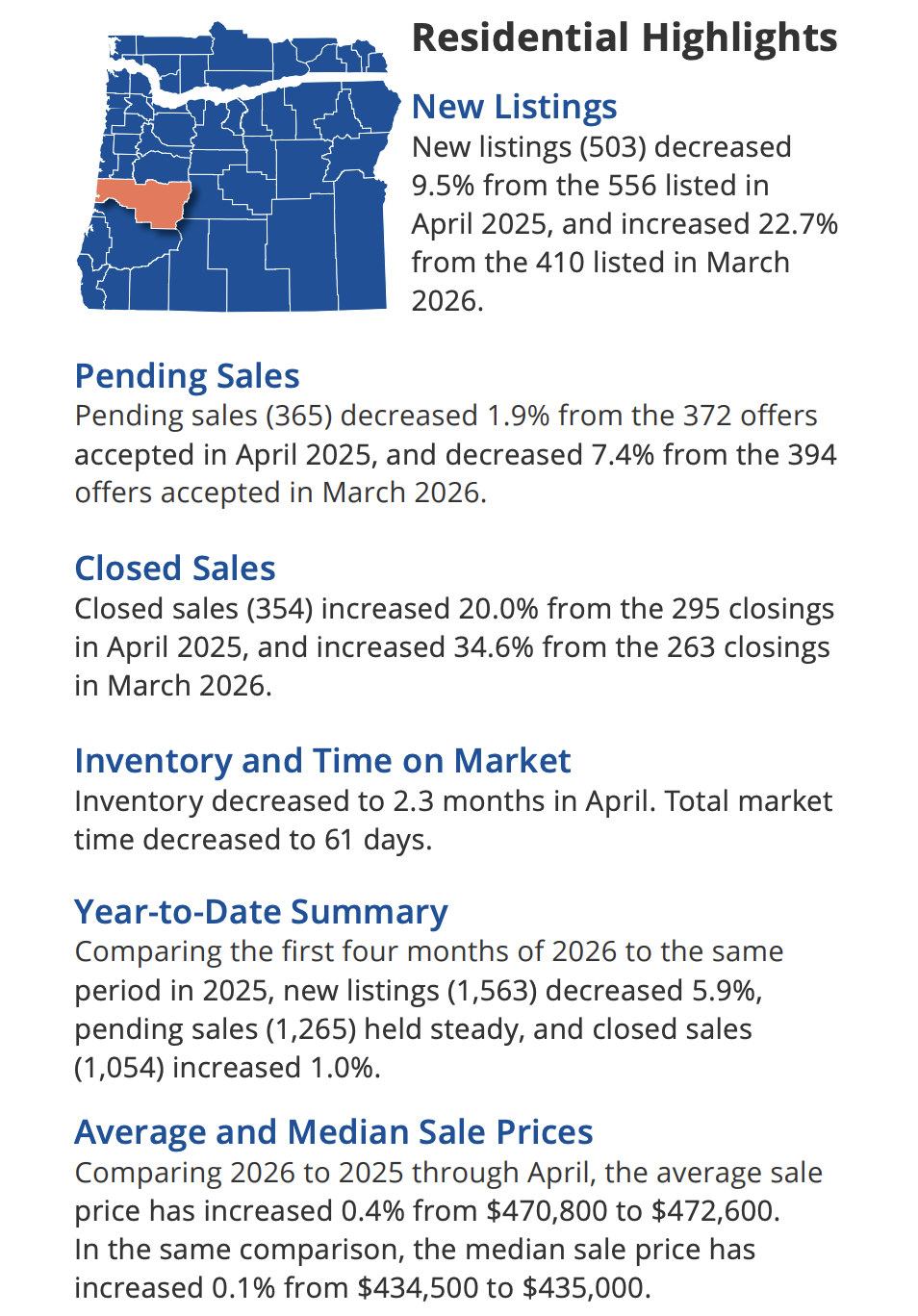
The residential real estate market in Lane County is an interesting one right now. Closed sales were up in April over March, as well as new listings. I believe that the increase in home sales is the result of the short period in February and March when mortgage interest rates dipped below 6%. We witnessed a much more robust housing market for a short period before mortgage rates increased to well over 6% again. When we see May home sales numbers, I would guess that they might show a sharp decrease in home sales compared to April.

We also saw a sharp increase in the number of homes going on the market for sale in April. I believe that was also mortgage rate-driven, as the inventory of homes on the market for sale dipped quickly as a result of increased buyer activity. It appears that the number of homes now going on the market for sale has declined, and our inventory of active home listings has decreased. We are now at a point again where the selection of homes for sale is more limited.

I am not sure where the spring and summer housing market is headed. There are many factors that will determine the future of home sales in Lane County. We will most likely have a better idea of what the future market holds after we see the home sales numbers for May.

The following are the home sales numbers for Lane County for the month of April 2026.


Have An Awesome Week!

Haas Real Estate Team

541.349.2620

galand@galandhaas.com
May 11, 2026

Where Have the First-Time Homebuyers Gone?

From the very beginning of home purchases in the United States, home affordability has been a catalyst for the very existence of the American Dream. Since the end of World War II, a growing and thriving middle class has made homeownership possible for a large portion of our society. The key to this has always been the ability of young citizens to afford purchasing a home instead of having to rent. A thriving first-time buyer market is the key to a thriving overall housing market. Move-up buyers who started early in life with an affordable home have given our country a path to homeownership, along with the opportunity to improve their home size and quality later in life.

Today, the first-time homebuyer market is almost nonexistent in many areas. Not only do young people struggle to purchase a home, but the absence of move-up buyers has also crippled the overall housing market. I decided to ask ChatGPT what it would take to kick-start the first-time homebuyer market in the U.S., and the response I received was right on target. Here is that response from ChatGPT!

To truly kick-start the U.S. first-time homebuyer market, the country would need a combination of affordability relief, inventory growth, financing innovation, and regulatory reform. Right now, the biggest barriers are:

  • High mortgage rates
  • High home prices relative to income
  • Lack of starter-home inventory
  • Large down payment requirements
  • Insurance/tax increases
  • Student debt burdens

Recent housing data shows affordability has improved only slightly, while mortgage rates remain above 6% and inventory is still constrained in many markets. 


Here are the biggest actions that could materially restart the first-time buyer market:

1. Lower Mortgage Rates

This is the single fastest catalyst.

A drop from 6.5% to 5.5% dramatically changes affordability.

Lower rates would:

  • Increase purchasing power
  • Bring sidelined buyers back
  • Improve confidence
  • Increase transaction volume

The challenge is rates are tied to inflation, Federal Reserve policy, and global economic uncertainty. 


2. Build More Starter Homes

The U.S. still has a structural housing shortage estimated in the millions of homes. 

Most builders currently favor:

  • Larger homes
  • Luxury homes
  • Higher-margin developments

The market needs:

  • Smaller lot homes
  • Townhomes
  • Condos
  • Cottage communities
  • Manufactured housing
  • Build-to-own developments

Possible solutions:

  • Tax incentives for starter-home construction
  • Faster permitting
  • Reduced impact fees
  • Zoning reform
  • Federal infrastructure support for new developments

Without significantly more supply, prices remain sticky even when demand weakens. 


3. Expand Down Payment Assistance

Many first-time buyers can afford monthly payments but cannot save:

  • 3%–10% down
  • Closing costs
  • Reserves

Programs that help:

  • Forgivable second mortgages
  • Grant programs
  • Tax credits
  • Shared-equity programs
  • Employer-assisted housing

Many states already offer assistance, but awareness is low and qualification rules can be restrictive.


4. Reduce Regulatory and Zoning Restrictions

Many local regulations unintentionally block affordable housing.

Examples:

  • Minimum lot sizes
  • Parking requirements
  • Height restrictions
  • Lengthy permit timelines
  • Environmental review delays

These add substantial cost per home.

Cities allowing:

  • Duplexes
  • ADUs
  • Cottage clusters
  • Higher density near transit

often see better affordability trends over time.


5. Address the “Mortgage Lock-In” Effect

Millions of owners still have 2%–4% mortgages and refuse to sell because replacing their home means taking a 6%+ loan. 

This freezes inventory.

Possible solutions:

  • Portable mortgages
  • Temporary tax incentives to sell
  • Assumable loan expansion
  • Builder rate buy-down programs


6. Lower Insurance and Property Tax Burdens

In many markets, insurance costs are becoming a major affordability issue. 

Especially in:

  • Florida
  • California
  • Gulf Coast states
  • Fire-risk regions

Monthly ownership costs now often include:

  • Mortgage
  • Taxes
  • Insurance
  • HOA fees

which pushes many first-time buyers out of qualification ranges.


7. Student Loan and Debt-to-Income Reform

A large number of younger buyers qualify on income but fail debt-to-income ratios because of:

  • Student loans
  • Auto debt
  • Credit cards

Potential improvements:

  • Better DTI flexibility
  • Income-based repayment exclusions
  • Student-loan matching savings plans
  • Tax-favored first-home savings accounts


8. Encourage Wage Growth Relative to Housing Costs

Long-term affordability only improves when income growth outpaces housing inflation.

Some 2026 forecasts suggest affordability may improve modestly because wage growth is finally exceeding home-price growth. 

But many first-time buyers are still priced out.


9. Create Tax Incentives Specifically for First-Time Buyers

Possible federal actions:

  • Revive first-time buyer tax credits
  • Mortgage interest enhancements
  • Savings account incentives
  • Capital gains incentives for sellers moving to starter-home buyers

A meaningful federal tax credit could temporarily stimulate demand.


10. Improve Consumer Confidence and Stability

Housing markets freeze when people fear:

  • Job loss
  • Rate volatility
  • Recession
  • Falling home values

The market currently suffers from what many analysts describe as a “frozen affordability” environment:

  • buyers stretched
  • sellers stuck
  • transactions low
  • prices not falling enough 

Stable rates and economic certainty alone could bring many buyers back into the market.


The Biggest Reality

The U.S. likely does not need a housing crash to restart first-time buying.

What it probably needs is:

  • Slightly lower rates
  • More inventory
  • Slower price growth
  • Better financing access
  • More starter-home construction

If those happen together, the first-time buyer market could improve substantially over the next 2–4 years.


Have An Awesome Week!

Haas Team Real Estate

541.349.2620

galand@galandhaas.com